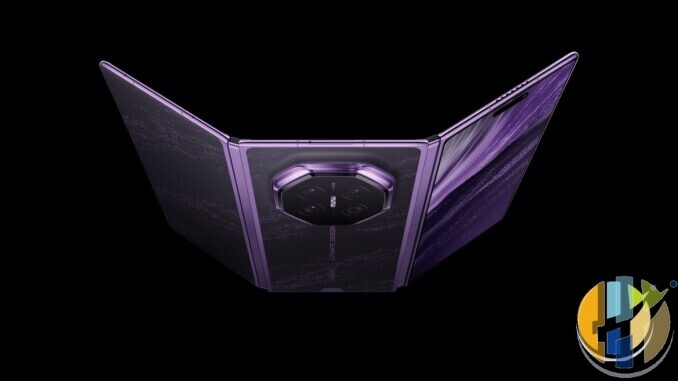
Three panels. One phone. A China price that starts near a decent laptop. Huawei’s Mate XT 2 Ultimate Design is the second-generation tri-fold that landed in early September 2026, and the honest question for husham.com readers is not “is the hinge clever?” It is “who among us actually needs a tablet that folds into a pocket brick, when a Fire Stick and a normal phone already do the telly job?”
I have not sat with a UK retail unit. Global shelves are not confirmed. US availability looks unlikely soon. What follows is a considered review from Huawei’s China launch specs, public product materials, and the early hands-on wave. No theatre. Facts, tradeoffs, and my take for people who stream IPTV and catch-up on phones, tablets, and living-room sticks.
What actually changed from the first Mate XT
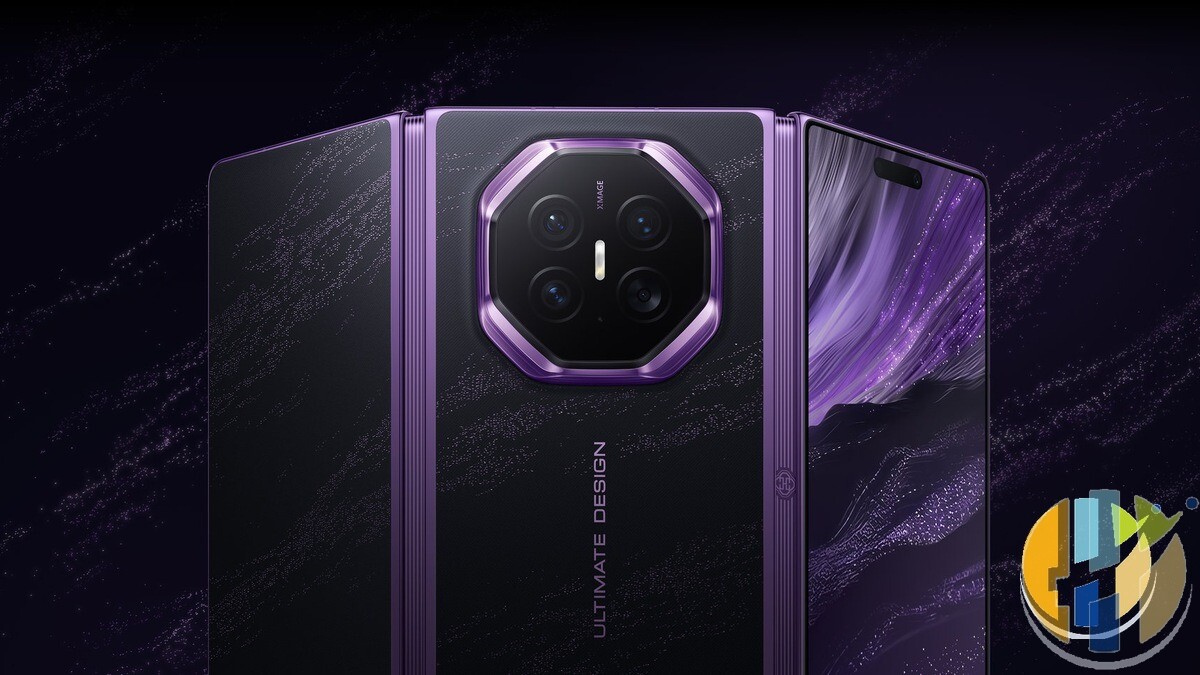
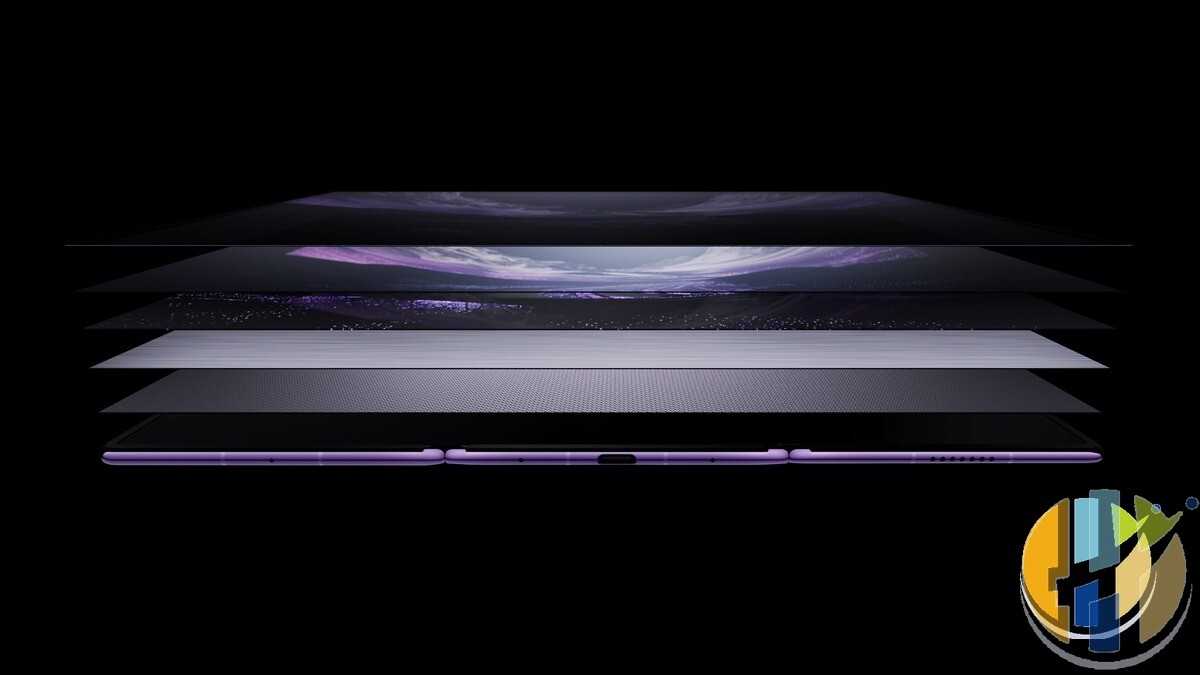
The headline engineering move is the fold itself. Gen 1 left a flexible panel on the outside when closed. The XT 2 folds both wings inward into a G-shaped / wing layout, so the big flexible screen sits sealed inside the body. That is why the durability story and the IP claims moved together.
Closed thickness is about 12.3mm. Fully open, the thinnest span is about 3.5mm. Weight sits around 299g. Huawei claims IP58 and IP59. On paper that is a serious step for a tri-fold, not a fragile showpiece you leave in a drawer.
Outside: roughly 6.5-inch LTPO OLED cover, 120Hz, peak brightness claimed around 6,500 nits, with 1,440Hz PWM dimming in the materials. Inside: about 10.2-inch 3K LTPO when unfolded. Treat the inner refresh carefully. Public sheets and early coverage point at 90Hz on base SKUs without the privacy panel, with 120Hz and Lingdun privacy more often tied to higher configurations. Do not assume every box gets the same inner panel.
Lingdun, where fitted, is a hardware privacy display (dual-pixel style). Huawei’s pitch is a viewing cone that tightens dramatically for shoulder-surfers. Useful on a train. Pointless on your sofa. And it costs more.
Chip, battery, cameras, HarmonyOS 7
Chip naming on Huawei’s own materials is Kirin 9050 Pro. Stick to that. The company also talks up a LogicFolding Tau piece in the hinge story. Battery is 5,600mAh with 66W wired and 50W wireless charging. RAM is 16GB across the China SKUs that were listed at launch.
Cameras, as published: 50MP main with variable aperture around f/1.5–f/4, 40MP ultrawide, 50MP periscope at about 3.5x optical, plus 8MP selfies on cover and inner. Cover screen as a viewfinder for the rear set is the neat party trick for that form factor. Optional ECG via metal-frame electrodes is a claim on some materials. Treat it as a China-feature footnote, not a medical device pitch for UK buyers.
Software is HarmonyOS 7 at debut. Large-screen multitasking includes the usual three-apps-side-by-side story when unfolded. For Western app habits that is the real wall. No Google Play on many of these China units. Banking apps, some streaming clients, and random UK utilities become grey-import homework. AppGallery and sideloads exist. They are not the same as a Pixel or Galaxy you buy on Oxford Street.
China money. UK reality.
China launch pricing started at ¥19,999 for 16GB/256GB (about £2.3k / about $2,980 at the conversions floating with the announcement). Storage steps climb through 512GB and 1TB. Privacy 1TB SKUs sit higher. The 2TB special with pen bundle was listed around ¥29,999. All of that is China retail, not Carphone Warehouse.
Grey import means warranty pain, possible band/radio surprises, and “who repairs a cracked 10.2-inch fold?” as a genuine question. Screen replacement numbers quoted in the China coverage are not pocket change. If you are the sort of person who drops phones on tiled kitchens, this is a bad romance.
Who this is actually for (streaming readers)
Be blunt. Most people who watch IPTV, Netflix, iPlayer, or match streams on the go do not need this.
- Buy-adjacent curiosity if you already live deep in Huawei’s China ecosystem, want a single device that is phone plus tablet for flights and hotel rooms, and can absorb a near-£2.3k+ hit without blinking.
- Watch-this-space if you care about foldable engineering, privacy glass experiments, and whether tri-folds ever become less absurd for travel video.
- Skip for daily UK streaming if your real goal is big-screen football and catch-up. A current Fire Stick / Google TV box / Apple TV on the telly still wins on apps, cost, and “it just works.” Pair that with a normal phone or a mid tablet. See the IPTV hardware shortlist and the Fire Stick / Vega OS note if you are refreshing the living-room stick. Apple folk waiting on a rumoured box refresh can skim the Siri AI Apple TV report.
Unfolded, the XT 2 is a tablet-class canvas for video. That is the seduction. At ~299g in the hand all day, plus HarmonyOS app gaps, the seduction fades fast for anyone whose catalogue lives in Western stores.
My take
Impressive engineering. Genuinely. Inward fold, IP58/IP59 claims, thin open profile, bright cover panel, optional hardware privacy. As a China flagship flex, it earns the gawp.
As a UK must-buy for husham.com’s streaming crowd? No. Not yet. Not at this money. Not with grey-import friction and no reliable Google Play path for many units. Better as a “watch this space / China flagship” piece than a shopping list item.
If Huawei ever brings a properly supported Western SKU with sane app access and a clearer repair path, reopen the file. Until then, keep the tri-fold as airport theatre. Put the football on a stick. Keep the phone boring and reliable.
Brilliant hinge. Wrong purchase for most of us.
Also useful: practical picks while the Mate XT 2 is not sold on Amazon.
- Anker Nano Power Bank (10,000mAh, 30W, built-in USB-C cable): a pocket battery that keeps a flagship phone going through a long day of streaming. Amazon UK | Amazon US | Amazon DE | Amazon FR | Amazon IT
- Google TV Streamer 4K: a simple Google TV box with Ethernet and the full Play Store. Amazon UK | Amazon US | Amazon DE | Amazon FR | Amazon IT
Best IPTV boxes to buy
These are media boxes and sticks that can run players and licensed apps. The first six are Google certified Android TV or Google TV devices with Google Play. The three Fire TV Sticks run Amazon’s own systems with the Appstore instead of Google Play: the 4K Max and 4K Plus run Fire OS, which is Android based, while the new Fire TV Stick 4K (2026) runs Vega OS, which does not allow sideloading Android apps, only Appstore apps. The last one, the Formuler, runs its own Android and is not certified. They are not pirate hardware. They do not come with channels or playlists. I am not claiming I personally lab-tested every SKU this month.
Pick a Google TV box when you want Play Store apps on a proper TV OS or a dedicated player behind the sofa. Pick a Fire TV Stick when Prime Video and the Appstore already cover what you watch. If you need an Android player from outside the Appstore, skip the Vega OS stick.
- NVIDIA SHIELD TV Pro: the premium pick, a certified Android TV player with AI upscaling, Dolby Vision/Atmos and Gigabit Ethernet for the main living-room telly. Amazon UK | Amazon US | Amazon DE | Amazon FR | Amazon IT
- Google TV Streamer 4K: solid Google TV living-room default with Ethernet, 32GB storage and Dolby Vision/Atmos. Amazon UK | Amazon US | Amazon DE | Amazon FR | Amazon IT
- Xiaomi TV Box S (3rd Gen): Google TV box with 32GB storage, Wi-Fi 6 and Dolby Vision/Atmos, the cheaper box route than the Streamer. Amazon UK | Amazon US | Amazon DE | Amazon FR | Amazon IT
- Xiaomi TV Stick 4K (2nd Gen): budget Google TV stick with Wi-Fi 6 and Dolby Vision/Atmos when you want HDMI-simple, not a full box. Amazon UK | Amazon US | Amazon DE | Amazon FR | Amazon IT
- Budget Google TV 4K player: a cheaper certified Google TV player for a second telly. The model differs by store, so each link names the one you get there. MECOOL KD3 (Amazon UK) | onn. Google TV 4K Streaming Box (Amazon US) | Strong LEAP-NOVA-X (Amazon DE) | Strong LEAP-NOVA-X (Amazon FR) | Strong LEAP-NOVA-X (Amazon IT)
- MECOOL MEon1: Google TV certified 4K box with AI upscaling and 32GB storage for a dedicated player behind the sofa. Amazon UK
- Fire TV Stick 4K Max: the most powerful Fire TV Stick, with Wi-Fi 6E, Dolby Vision/Atmos and 16GB storage. It runs Fire OS, which is Android based, so you get Appstore apps and can still sideload an Android player. Amazon UK | Amazon US | Amazon DE
- Fire TV Stick 4K Plus: the older Fire OS stick with Wi-Fi 6 and Dolby Vision/Atmos. It is being phased out, so buy it only while stock lasts. Like the Max, it can still sideload Android apps. Amazon UK | Amazon US | Amazon DE | Amazon FR | Amazon IT
- Fire TV Stick 4K (2026): the newest and slimmest 4K stick, with a new remote. It runs Vega OS, which does not allow sideloading Android apps, only Appstore apps, so check your player is in the Appstore before you buy. Amazon UK | Amazon US | Amazon DE | Amazon FR | Amazon IT
- Formuler Z12 Ultra SE: the newest Formuler box, built around MYTVOnline 4 for IPTV playlists. It runs Formuler’s own Android rather than certified Google TV, so there is no Netflix in HD and no Google certification. Formuler Z12 Ultra SE (Amazon UK) | Formuler Z12 Ultra SE (Amazon US) | Formuler Z12 Ultra SE (Amazon DE) | Formuler Z12 Ultra SE (Amazon FR) | Formuler Z12 Ultra SE (Amazon IT)
Whichever you pick, check that the app you need is in its store before you pay. And none of these boxes or sticks magically make unlicensed streams legal.