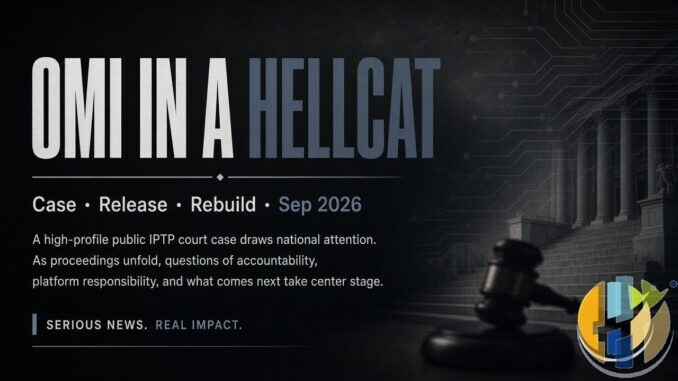
Bill Omar Carrasquillo, better known as Omi In A Hellcat, walked out of federal custody around 6 January 2026. For UK readers who live on Fire Sticks and keep half an eye on illegal IPTV headlines, his story is not a how-to. It is a high-profile reminder that running a pirate subscription business is a crime, that flashy YouTube wealth can be built on stolen rights, and that player apps are not the same thing as illegal content.
This is the first piece in a new every-two-months series on Omi In A Hellcat for husham.com. Tonight’s job is narrow: the case at a high level, the sentence and release numbers that check out in reputable reporting, what he has said publicly about rebuilding, and what that means for a UK audience watching FACT-style crackdowns on “dodgy” Fire Sticks. No playlists. No APK mirrors. No download codes. Illegal IPTV stays illegal.
Who he is, and why Fire Stick readers recognise the shape of the story
Carrasquillo is a US content creator with North Philadelphia roots and a New Jersey base. In the late 2010s his YouTube channel leaned hard into luxury cars, jewellery and a rapid-money aesthetic. Peak reporting put the channel north of 800,000 subscribers. The brand name itself nodded to Dodge Hellcat muscle cars. That lifestyle content is what most casual viewers saw.
Federal prosecutors later tied the fortune to something uglier: Gears TV Reloaded, an illegal IPTV operation that ran from about March 2016 to November 2019. Reporting summarised from court and DOJ material describes a service that sold access to more than a thousand pirated TV channels, movies, sport and pay-per-view, including programming taken from major US cable and satellite providers such as Comcast, Verizon FiOS and DirecTV. Investigators put the illicit revenue at more than $30 million.
One detail matters for this site’s audience. Coverage of the scheme repeatedly mentions modified Amazon Firesticks sold alongside monthly subscriptions. That is the same hardware shape UK households know. It does not mean a stock Fire Stick from Amazon is illegal. It means pre-loaded or mis-sold sticks used to deliver stolen live TV and VOD were part of how this particular US operation scaled. Hardware is a player. The crime sits in the unlicensed content and the business built on it.
Raid, plea, sentence: the verified spine
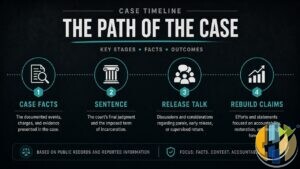
The FBI raided Carrasquillo’s home on 27 November 2019, seizing cars, jewellery, computers and bank funds according to contemporaneous and later encyclopaedic summaries. A federal indictment followed in September 2021 on dozens of counts. Facing a theoretical maximum measured in centuries if convicted on everything, he pleaded guilty in February 2022.
On 8 March 2023, U.S. District Judge Harvey Bartle III sentenced him to 66 months (five and a half years) in federal prison. Court and DOJ-facing reporting also records:
- Forfeiture of more than $30 million in illegal proceeds, including cash, jewellery, real estate and a large vehicle collection (often reported as 57 cars), later auctioned by federal authorities
- Restitution of about $10.7 million to victim cable companies
- More than $5 million in restitution to the IRS, bringing total restitution into the “more than $15 million” band used in DOJ-facing write-ups
- Conviction on a basket of counts covering conspiracy, Digital Millennium Copyright Act violations, copyright performance and reproduction offences, access-device fraud, wire fraud, bank false statements, money laundering, false statements to law enforcement, and tax evasion
I am sticking to those numbers because they recur in US Attorney / DOJ-derived reporting and specialist piracy-industry coverage. I am not repeating every social-media claim about duffel bags of cash or informal sale figures that sit outside the court’s forfeiture and restitution figures.
66 months on paper, about three years inside
Carrasquillo was released around 6 January 2026. Multiple reputable round-ups, including Yahoo Entertainment’s January 2026 piece, say he served roughly three years of the 66-month term. Early release is attributed to federal good-conduct credits plus credit for time already served before sentencing. That is not a vanishing sentence. It is how US federal time often compresses when credits stack.
One detail still conflicts across secondary sources and is worth flagging honestly. Some January 2026 entertainment write-ups say he faces three years of supervised release. DOJ-facing summaries of the March 2023 sentencing, including the Justice Department’s PRO IP Act annual report for FY 2023 and trade coverage of the DOJ announcement, say five years of supervised release. Until a primary judgment extract is in front of you, treat the prison term (66 months) and the roughly January 2026 release date as solid, and treat the supervised-release length as reported inconsistently between three and five years.
Either way, he is not a free-and-clear celebrity reboot. Supervised release, restitution and forfeiture are part of the public record. A separate Nike trademark default judgment of $8 million against him and Reloaded Merch LLC also surfaced in 2024 reporting. That is a civil IP fight, not the IPTV criminal case, but it underlines how expensive the post-raid legal scrub has been.
What he has said publicly about rebuilding
In June 2026, VladTV published a long-form interview series with Carrasquillo after his release. The publicly visible write-ups describe him as focused on legitimate business ventures: content creation, fashion, sneakers and tech development. One segment summary states he is “retired from the piracy scene” and wants a lawful tech path. That is his public framing. It is not a court order proving every future product will stay clean, and it is not an endorsement from this site.
I am not treating interview colour as substitute for the indictment. When VladTV summaries float huge informal sale figures or alternate product nicknames, I leave those as interview claims. The numbers that matter for a news pack are the ones that survived DOJ and court reporting: more than $30 million in scheme revenue and forfeiture, tens of thousands of subscribers in prosecutorial language, and a 66-month federal sentence.
Wikipedia’s “Arrest of Omi in a Hellcat” page now also notes the January 2026 release, citing the Yahoo Entertainment round-up. That is useful as a secondary chronology check, not as primary law.
Why this lands for a UK Fire Stick audience
UK readers do not need a US YouTuber’s car collection. They need the principle. Through 2025 and into 2026, UK coverage of FACT and police activity has kept circling so-called dodgy Fire Sticks: devices and subscriptions sold to unlock unlicensed live TV and films. Enforcement reporting has focused on suppliers, resellers and operators. Warnings to suspected users have also appeared in FACT-linked campaigns. The legal line is not subtle. Selling or running illegal IPTV is criminal territory. Knowingly paying for stolen streams is not a clever life hack.
Two distinctions I will keep repeating in this series:
- A Fire Stick (or any Android / Fire TV player) is not illegal. Buying one from Amazon and installing official apps is ordinary living-room tech.
- Player apps are not the content. A legitimate IPTV player is a shell. What you point it at decides whether you are watching a licensed service or stolen feeds. Unlicensed playlists, “fully loaded” sticks and bargain “all sports forever” subscriptions are the problem, not the remote.
If you want the practical UK framing without the crime-tourist tone, I already keep that lane open on husham.com: how to think about IPTV legality by region, and how to choose a legal IPTV service without scam bait. Those pieces stay on licensed services and red flags. They are not mirrors of pirate catalogues.
What this first series piece is for
Omi In A Hellcat’s case is one of the largest illegal IPTV prosecutions to break into mainstream YouTube fame. The documented arc is simple enough for a UK tech reader: pirate subscription empire, FBI raid, guilty plea, 66-month sentence, massive forfeiture and restitution, release in early 2026 after roughly three years inside, then public talk of rebuilding on legitimate ventures.
I am not here to romanticise the Hellcats or the jewellery auctions. I am here to keep the record straight for people who ask me every week whether “loaded” sticks are still worth the risk. They are not. The player is legal. The stolen stream is not. Carrasquillo’s federal file is an expensive American proof of that line, and this series will track what he does next without turning husham.com into a piracy tip sheet.