Somewhere near the Moon’s south pole, inside a small crater that never gets much sun, there is a mobile network. It has a base station. It has a radio. It has a network core, the bit your phone company charges you for. It has not taken a single call.
So who was it built for? And why did it go quiet after about 25 minutes?
The headline is true. The first 4G network really did land on the Moon. What happened next is the part the launch posters left out.
A box with a secret
It was built by Nokia Bell Labs, and its name is wonderfully unromantic: the Lunar Surface Communications System, or LSCS. Nokia describes it as two parts. One is a “network in a box” that squeezes the radio, base station and core network of a normal 4G/LTE network into a single unit. The other is a set of small device modules, the lunar equivalent of the phone in your pocket (Nokia newsroom).
NASA helped pay for it through its Tipping Point programme. The plan was a cellular link between the lander, a small rover and a hopper (NASA launch release).
A phone network on the Moon with two customers. Hold that thought, because the customers matter more than the box.
The launch, the landing and the lean
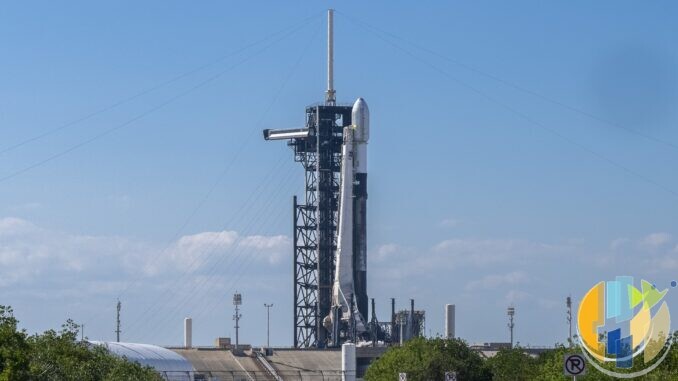
The box rode on Athena, the Nova-C lander built by Houston’s Intuitive Machines for its second mission, IM-2. Athena launched on a SpaceX Falcon 9 from Kennedy Space Center at 7:16 p.m. EST on 26 February 2025 (NASA).
Its passengers included the two customers: Grace, Intuitive Machines’ Micro Nova hopper, built to fly over the surface on thrusters, and MAPP, a small rover from Lunar Outpost. Both carried Nokia device modules.
On 6 March 2025, Athena touched down near Mons Mouton, close to the lunar south pole. Then the room went very quiet.
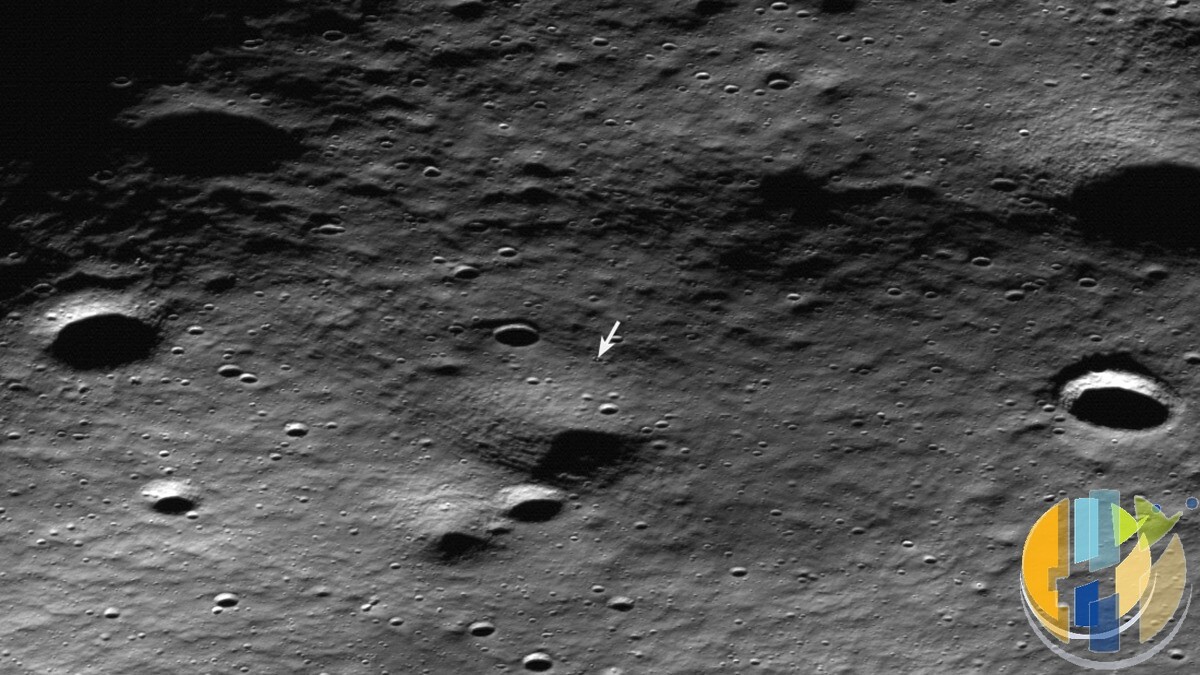
Athena was lying on its side in a crater. NASA put the landing spot more than 400 metres from the target; Intuitive Machines said about 250 metres. Space companies, like estate agents, are generous with distances. NASA’s Lunar Reconnaissance Orbiter later spotted it in a crater about 20 metres across; it still sent home over 400 megabytes of data (LROC, Arizona State University).
A lander on its side has solar panels pointing the wrong way. Intuitive Machines said that with the direction of the Sun, the angle of the panels and the extreme cold in the crater, it did not expect Athena to recharge. NASA said operations ended less than 13 hours after landing (NASA).
So did the network even switch on?
The 25 minutes
It did. According to Nokia, the network in a box powered on, took commands from Nokia’s mission control in Sunnyvale, California, and answered them. Telemetry confirmed an operational “on air” state, with base station, radio and core all working, and it ran without interruption for the whole 25 minute window it was given power (Nokia newsroom, 10 March 2025).
Twenty five minutes of perfect uptime. Somewhere a broadband provider is framing that as a target.
So a real 4G network went live on the Moon and talked to Earth. Which leaves the obvious question. Who did it talk to on the Moon?
The call that never rang
Nobody.
Nokia blames severe power limits from Athena’s badly angled solar panels. Then comes the sad detail in the small print. Right after landing, telemetry showed the device module on the Grace hopper drawing power as if it was working and ready for a connection. But the network box was only switched on several hours later. By then the hopper module had cooled well below its operating range, and a connection could no longer be made (Nokia).
The phone was on. Then the tower came on. By then the phone was frozen. Every one of us has lived a smaller version of this in a car park.
Neither Grace nor MAPP left the lander; Lunar Outpost said its rover survived and was ready to drive, but could not get out. NASA’s verdict was diplomatic: the hopper and the Nokia 4G/LTE technologies “were only able to complete some objectives” (NASA).
Thierry Klein, President of Bell Labs Solutions Research at Nokia, said: “If our device modules had been functional when our network in a box was powered up, all indications tell us that we would have been able to complete the first-ever cellular call on the Moon.”
So, honest scorecard. Landed: yes. Powered up: yes. Ran and reported home: yes. Connected a device on the Moon: no. Calls, video or data between lunar devices: none. And the network has not come back since.
Who the network was really for
Remember the customers? The hopper and the rover were the test audience. The real customers wear spacesuits.
In August 2024 Nokia and Axiom Space announced they would build 4G/LTE into Axiom’s AxEMU lunar spacesuit, carrying HD video, telemetry and voice over multiple kilometres so astronauts can send live video and talk to mission control on Earth (Axiom Space). Nokia told SpaceNews the system is designed to work up to two kilometres from the lander, a NASA requirement, with the network box riding on the crewed lander itself (SpaceNews).
That plan was written for Artemis III. Then NASA rewrote the calendar. In February 2026 NASA turned Artemis III into a 2027 test in low Earth orbit, with the first crewed landing moved to Artemis IV in 2028 (NASA). So 4G in a moonwalking suit now waits for a later mission than the press releases first promised.
The team behind the box has moved too. Nokia’s space venture is now called Modul8, and Nokia has proposed spinning it out as an independent company, a plan first announced in April 2026 that it says is still exploring alternative paths (Nokia blog). On 30 September 2026 NASA awarded Modulate Space Corporation a contract worth about $38 million to develop a lunar 5G network in a box with built-in Wi-Fi 6, including a flight demonstration on the lunar surface, with work running to the end of 2028 (NASA). NASA’s procurement notice describes Modulate Space as Modul8, formerly Nokia Bell Labs’ space team.
NASA Glenn’s LunarLiTES team keeps testing 4G and 5G on Moon-like terrain (NASA Glenn; NASA technical paper). Overhead, NASA’s LunaNet framework (NASA) and ESA’s Moonlight satellites, targeting initial service by the end of 2028 (ESA), aim to link it all back to Earth.
So, is there 4G on the Moon right now?
Here is the answer the whole story was hiding. No. There is no working phone network covering the Moon today, and nobody official claims there is. There is a Nokia network box that landed, switched on, worked perfectly for 25 minutes, reported home, and is now lying silent in a cold crater beside a rover and a hopper that never got out.
That still matters. It proved the kind of kit behind your mobile signal can survive launch, landing and lunar cold, and be switched on from California. The next attempt has a contract, a 5G upgrade and a budget. Who makes the first real call on the Moon is still an open question.
I would not hold your breath for roaming charges just yet. Then again, your network would find a way.
Best IPTV boxes to buy
These are certified Android TV / Google TV media boxes and sticks that can run players and licensed apps from Google Play. They are not pirate hardware. They do not come with channels or playlists. I am not claiming I personally lab-tested every SKU this month.
Buy one of these when: Fire TV sideload is a hassle on your model, you want Play Store apps on a proper TV OS, or you want a dedicated player shell behind the sofa. No Fire TV device is on this shortlist.
- NVIDIA SHIELD TV Pro: the premium pick, a certified Android TV player with AI upscaling, Dolby Vision/Atmos and Gigabit Ethernet for the main living-room telly. Amazon UK | Amazon US | Amazon DE | Amazon FR | Amazon IT
- Google TV Streamer 4K: solid Google TV living-room default with Ethernet, 32GB storage and Dolby Vision/Atmos. Amazon UK | Amazon US | Amazon DE | Amazon FR | Amazon IT
- Xiaomi TV Box S (3rd Gen): Google TV box with 32GB storage, Wi-Fi 6 and Dolby Vision/Atmos, the cheaper box route than the Streamer. Amazon UK | Amazon US | Amazon DE | Amazon FR | Amazon IT
- Xiaomi TV Stick 4K (2nd Gen): budget Google TV stick with Wi-Fi 6 and Dolby Vision/Atmos when you want HDMI-simple, not a full box. Amazon UK | Amazon US | Amazon DE | Amazon FR | Amazon IT
- Strong LEAP-NOVA: Google TV certified 4K stick on Android 14 with 32GB storage, Wi-Fi 6 and Dolby Vision, for a second telly. Amazon DE | Amazon FR | Amazon IT
- MECOOL MEon1: Google TV certified 4K box with AI upscaling and 32GB storage for a dedicated player behind the sofa. Amazon UK
Still shopping for a Fire TV device? Fine for Prime Video and the Appstore universe. Not the shortlist above. And none of these boxes magically make unlicensed streams legal.
Sources
- Nokia: Nokia and Intuitive Machines deliver first cellular network to the Moon (10 March 2025)
- NASA: Liftoff! NASA Tech, Science En Route to Moon with Intuitive Machines (27 February 2025)
- NASA: NASA Receives Some Data Before Intuitive Machines Ends Lunar Mission (7 March 2025)
- Intuitive Machines: Intuitive Machines Lands and Operates Second Mission on the Moon
- LROC, Arizona State University: IM-2 Athena Seen Obliquely
- Nokia: Nokia and Axiom Space partner on cellular connectivity for lunar spacesuits (21 August 2024)
- Axiom Space: Axiom Space and Nokia partner on next-gen lunar spacesuits
- SpaceNews: Axiom Space and Nokia partner to develop high-speed wireless communications for spacesuits
- NASA: NASA Adds Mission to Artemis Lunar Program, Updates Architecture
- Nokia blog: An important step for Nokia’s Modul8
- NASA: NASA Awards Contract to Develop 5G Communications for Moon (30 September 2026)
- NASA Glenn: Lunar LTE Studies (LunarLiTES)
- NASA Technical Reports Server: Envisioned Lunar Surface Communications Using 3GPP Cellular and Wi-Fi Technologies
- NASA: LunaNet, Empowering Artemis with Communications and Navigation Interoperability
- ESA: ESA’s Moonlight programme, pioneering the path for lunar exploration
Banner photo: IM-2 Falcon 9 on the launch pad by Charles & Maggie Boyer, CC BY 2.0, via Wikimedia Commons. Inline image: NASA/GSFC/Arizona State University.
Written by Dr Husham Memar