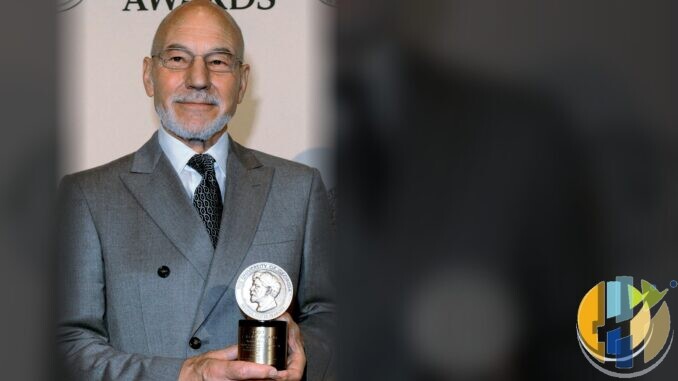
Sir Patrick Stewart has died. He was 86. His spokesperson, Kelly Bush Novak, told AP and other outlets that he died on Wednesday 28 October 2026 at his home in Los Angeles, in the care of his wife Sunny Ozell, after what the family called a brief and poignant journey with Alzheimer’s Disease and Lewy Body Dementia. The diagnoses had not been public before.
I am writing this as someone who respected him a lot. Patrick Stewart really changed my views on Star Trek and X-Men, and everything in between, to be honest. Most of his work was really amazing. What follows is his life in order, from Mirfield to the tributes that arrived after he died.
Quick timeline
- 13 July 1940: Born in Mirfield, West Riding of Yorkshire.
- Age 15: Leaves school; works as a junior reporter and obituary writer.
- Late 1950s: Scholarship to Bristol Old Vic Theatre School.
- 1966: Joins the Royal Shakespeare Company; marries Sheila Falconer.
- 1970s to mid 1980s: RSC mainstay; I, Claudius, Tinker Tailor, Excalibur, Dune, Lifeforce.
- 1987 to 1994: Captain Jean-Luc Picard in Star Trek: The Next Generation; four Trek films follow to 2002.
- 2000 to 2017: Professor X in the X-Men films, through Logan.
- 2001 / 2010: OBE, then knighthood for services to drama.
- 2013: Marries Sunny Ozell.
- 2020 to 2023: Star Trek: Picard; Sonnet-a-Day readings; memoir Making It So (2023).
- 2022 / 2026: MCU as Professor X in Doctor Strange in the Multiverse of Madness, then final screen role in Avengers: Doomsday.
- 28 October 2026: Dies in Los Angeles, aged 86.
Mirfield: birth, family and a hard childhood
Patrick Hewes Stewart was born on 13 July 1940 in Mirfield, in the West Riding of Yorkshire. His mother, Gladys (née Barrowclough), was a weaver and textile worker who loved amateur dramatics and encouraged her sons to take part. His father, Alfred Stewart, had been a regimental sergeant major in the Parachute Regiment. BBC reporting on Stewart’s life records that Alfred’s wartime experience, including the Dunkirk evacuation, left him with what would now be recognised as post traumatic stress. He drank, he was quick to anger, and he was violent toward Gladys. Patrick later said he himself was not the target of those fists, but he witnessed the attacks and felt powerless to stop them.
The family was poor. In interviews Stewart described a small house with no hot water and no bathroom, and said he learned early about unfairness and inequality. Drama became an escape. A teacher, Cecil Dormand, introduced him to Shakespeare and pushed him to perform. His first public appearance was in a local church production of Cinderella. On stage the script was fixed and the ending known. At home it was not.
Those years shaped the advocacy of his later life. He became a patron and ambassador of Refuge, the UK domestic abuse charity, saying he did it for his mother because he could not help her then. After discovering more about his father’s wartime trauma on the BBC genealogy series Who Do You Think You Are?, he also became an ambassador for Combat Stress, which supports veterans with PTSD and related mental health conditions. He made an Amnesty International video about domestic violence that drew directly on what he had seen as a child.
Leaving school, the local paper, Bristol Old Vic
Stewart left school at 15. He worked as a junior reporter and obituary writer on the Dewsbury Reporter, while pouring energy into local theatre and learning Shakespeare speeches by heart. His editor eventually forced a choice between journalism and what the paper saw as a foolhardy acting habit. Stewart chose the stage. He picked up his typewriter and walked out.
Around 18 he lost all his hair, a blow for a self conscious teenager who feared it would end any chance of being cast, or of being found attractive. It became one of the most recognisable silhouettes in popular culture. He won a scholarship to the Bristol Old Vic Theatre School. There, aged about 17, he watched Peter O’Toole as Vladimir in Waiting for Godot and told himself he would play that part one day. It took roughly fifty years.
After training he worked in regional theatre, including Manchester’s Library Theatre, before the Royal Shakespeare Company became the centre of his working life.
The RSC years and the classical stage
Stewart joined the Royal Shakespeare Company in 1966, after writing to beg an audition while working at the Bristol Old Vic company. His first RSC season included small roles such as Sir Walter Blunt in Henry IV Part 1. He stayed more or less full time into the early 1980s, appearing across the company’s repertoire as Oberon, Enobarbus and many others. He later became an Honorary Associate Artist of the RSC.
His Broadway debut came in Peter Brook’s celebrated production of A Midsummer Night’s Dream, as Snout. In 1979 he won the Laurence Olivier Award for Best Actor in a Supporting Role for Antony and Cleopatra. He left the RSC for the National Theatre in 1984, still steadily employed, still rarely the marquee name on a film poster. He later returned to major Shakespeare with new force after television fame: Prospero in The Tempest (1995); a radical Othello (1997) in which he played Othello as a white mercenary in a Black African setting; Mark Antony opposite Harriet Walter’s Cleopatra (2007); and Macbeth opposite Kate Fleetwood (2007 to 2008), which brought a Tony nomination on Broadway. Critic Nicholas de Jongh called that Macbeth the best he had ever seen.
In 2008 he played Claudius (and the Ghost) in the RSC Hamlet with David Tennant, winning a second Olivier Award for Best Supporting Actor in 2009. In 2009 he finally played in Waiting for Godot with Ian McKellen, the fulfilment of that Bristol Old Vic memory. The pair later brought Godot and Harold Pinter’s No Man’s Land to Broadway in repertory. For years he also performed a one man A Christmas Carol on Broadway, playing dozens of Dickens characters alone on stage, work that also brought Drama Desk recognition.
Early television and film
Screen work began in parallel with the stage. His TV debut was as a fireman in a 1967 episode of Coronation Street. He played Lenin in the BBC’s Fall of Eagles (1974), Sejanus in I, Claudius (1976), and Soviet intelligence roles in Tinker Tailor Soldier Spy (1979) and Smiley’s People (1982). Film parts in the same era included Leondegrance, Guinevere’s father, in John Boorman’s Excalibur (1981); Gurney Halleck in David Lynch’s Dune (1984); and Dr Armstrong in Tobe Hooper’s Lifeforce (1985). He later described the first half of his career as sound but never spectacular. That was about to change.
Star Trek: The Next Generation and the films
In 1987 Stewart was cast as Captain Jean-Luc Picard in Star Trek: The Next Generation. Producer Robert Justman spotted him at a Shakespeare lecture in Los Angeles and told his wife he thought he had found their captain. Stewart knew little of the original series. Ian McKellen advised him not to throw away a stage career on a wild goose chase into space. Stewart signed a long contract expecting a short run and a return to the boards. The show ran seven seasons, from 1987 to 1994.
Picard was written as French, yet Stewart gave him a distinctly English gravity: Shakespeare on the ready room shelf, Earl Grey tea, diplomacy before fists. Early on, Stewart found the long American shooting days and the cast’s lighter mood difficult; Brent Spiner later recalled being dressed down by “the captain.” Stewart softened, asked for a joke a day, and grew fiercely proud of the series and of Picard’s hold on younger viewers. Gene Roddenberry backed his baldness on screen. A wig in early tests had looked wrong; in the 24th century, Roddenberry said, nobody would care.
Stewart returned as Picard in four feature films: Star Trek Generations (1994), First Contact (1996), Insurrection (1998) and Nemesis (2002). Fame brought better theatre offers and typecasting at the same time. He told interviewers that some film directors only saw Picard and did not want that voice in their movie. The role that made him world famous also narrowed some doors. He kept opening others on stage.
X-Men, Logan and the MCU
From 2000 he played Professor Charles Xavier in Bryan Singer’s X-Men, then across the film series that followed, with Ian McKellen as Magneto. The friendship that began in British theatre became one of popular cinema’s great paired rivalries. Logan (2017) gave Xavier a raw late chapter. In 2022 Stewart entered the Marvel Cinematic Universe as an alternate universe Professor X in Doctor Strange in the Multiverse of Madness.
Marvel Studios’ remembrance after his death states that he returned once more as Xavier in Avengers: Doomsday, and that this is his final on-screen appearance. The film is scheduled for cinemas on 18 December 2026. The Independent and other outlets report that the performance will be seen posthumously. Marvel’s tribute does not say the December release is being moved. Trailer footage already shows Stewart as Xavier alongside McKellen. As of 29 October 2026, Marvel has not issued a separate public statement tying his death to Avengers: Secret Wars, and this article will not invent one.
Comedy, voice work and other screen roles
Away from franchise leads he kept a wide brief. He played the flamboyant Sterling in the film Jeffrey (1995). He was Captain Ahab in the 1998 USA Network Moby Dick, earning Emmy and Golden Globe nominations. He guested as a pointed version of himself in Ricky Gervais’s Extras (Emmy nominated). He starred as cable news import Walter Blunt in the Starz comedy Blunt Talk (2015 to 2016), produced with Seth MacFarlane. He voiced CIA Deputy Director Avery Bullock for years on American Dad! and made recurring guest appearances on Family Guy. Narration and voice roles stretched from commercials to animation, including work connected to MacFarlane’s Ted films.
In March 2020, during lockdown, he began a Sonnet-a-Day series on social media, reading Shakespeare’s sonnets to camera with the Folger text beside him, after an affectionate response to an earlier reading of Sonnet 116. It was classical actor and internet companion in one daily habit.
Honours and awards
Stewart was appointed OBE in the 2001 New Year Honours for services to acting and the cinema, and collected the honour at Buckingham Palace in July 2001. He was made a Knight Bachelor in the 2010 New Year Honours for services to drama; Queen Elizabeth II conferred the knighthood at Buckingham Palace on 2 June 2010. He received two Laurence Olivier Awards: Best Supporting Actor for Antony and Cleopatra (1979) and Best Supporting Actor for Hamlet (2009). He won a Grammy Award in 1996 for Best Spoken Word Album for Children for Prokofiev’s Peter and the Wolf. Nominations across his career included a Tony (Macbeth), multiple Emmys and Golden Globes, and Screen Actors Guild recognition. He received a star on the Hollywood Walk of Fame in 1996.
Advocacy, Huddersfield and Oxford
Public service sat beside the credits. Beyond Refuge, Combat Stress and Amnesty, he was a long time Labour supporter and, in 2016, one of hundreds of arts figures who backed Remain in the Brexit referendum. He served as Chancellor of the University of Huddersfield from 2004 to 2015, then as Emeritus Chancellor; the university’s drama building and theatre bear his name. In 2007 he was Cameron Mackintosh Visiting Professor of Contemporary Theatre at Oxford, based at St Catherine’s College. He remained a lifelong Huddersfield Town supporter and became president of the club’s academy project for young players. He carried the Olympic torch in the 2012 London relay and called it unforgettable.
Marriages, children and Making It So
Stewart married Sheila Falconer in 1966. They had two children, Daniel and Sophie, and divorced in 1990. Daniel became an actor and appeared with his father in projects including the Star Trek: The Next Generation episode “The Inner Light” and later Blunt Talk. Stewart married Wendy Neuss, a Next Generation producer, in 2000; they divorced in 2003. In 2013 he married singer songwriter Sunny Ozell. Ian McKellen officiated; when it emerged that McKellen’s credentials did not cover Nevada, the couple held a further ceremony so the marriage would be legally sound. Sunny was with him when he died.
In October 2023 he published his memoir, Making It So, taking its title from Picard’s catchphrase. Written largely during the pandemic, it is candid about childhood violence, career luck and missteps, and describes his relationship with his children as a work in progress. AP coverage of the book noted his habit of judging himself as sharply as any critic. The memoir, the Sonnet-a-Day readings, and the late return to Picard all belong to the same late chapter: an artist still explaining himself, still working, still refusing a neat retirement.
Star Trek: Picard, and cheering on what came next
Stewart at first refused invitations to return as Picard. He changed his mind after meeting the writers planned for what became Star Trek: Picard (2020 to 2023) on Paramount+. The series followed an older, more fragile Jean-Luc across three seasons, ending with a full Next Generation cast reunion in season three that Stewart later called joyous. He told TV Insider, around Star Trek’s 60th anniversary coverage, that he would “always cheer on new series and new adaptations,” and that fresh voices were critical.
For a quick guide entry on this site, see the Star Trek: Picard page on tv.husham.com. Stewart’s person card is at tv.husham.com/person/37120.
Death, Doomsday and the tributes
He died on 28 October 2026 in Los Angeles, aged 86, after Alzheimer’s Disease and Lewy Body Dementia, in Sunny’s care. The family statement spoke of music, prayers, tears, laughter, and the peaceful ease on his face. He is survived by Sunny and by his children.
Marvel Studios said it was deeply saddened, praised the grace and humanity of his Xavier, and identified Avengers: Doomsday (18 December 2026) as his final on-screen appearance. William Shatner said Stewart “stood for the best of us.” Hugh Jackman said “we lost one of the greats of stage and screen.” Those tributes, reported by the BBC and others on 29 October, match what many viewers already felt.
I respected him a lot. He changed how I saw Star Trek and X-Men, and everything in between. Most of his work was really amazing. Dignity on stage and on screen is rarer than spectacle. He made dignity look like the interesting choice, from Mirfield to the Enterprise, from the RSC to a wheelchair that somehow held a whole philosophy of kindness.
Which part of his life stays with you first: the Yorkshire childhood, Shakespeare, Picard, Professor X, or the quiet advocacy that grew from what he survived at home? Tell me in the comments. I will read them.
Written by Dr Husham Memar