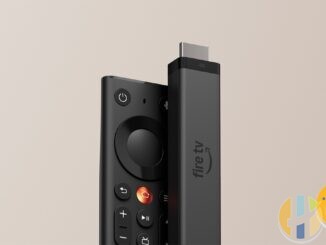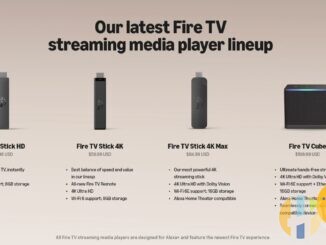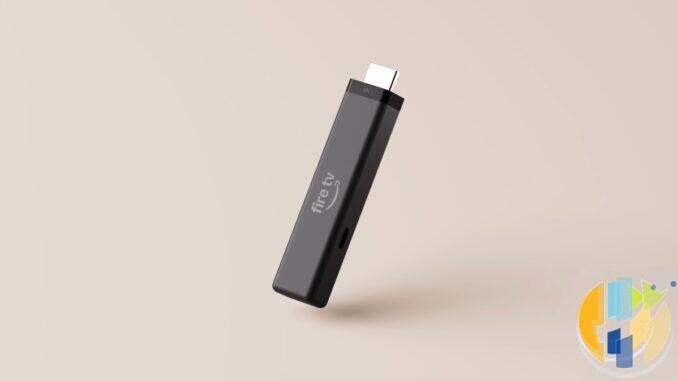
Amazon's pitch for the new Fire TV Stick 4K (3rd Gen) is speed. “Apps launch over 35% faster” is the line doing the rounds, and plenty of people have read it as “35% faster than my old Fire Stick”. That is not what Amazon said.
This piece goes through the spec sheet line by line: the speed claim, the chip and memory, Wi-Fi 6, Bluetooth 5.3, AV1, the HDR formats it supports (and the one it does not), and what 8 GB of storage means on Vega OS. All figures come from Amazon's announcement and its developer device specifications unless I say otherwise.
The full spec sheet
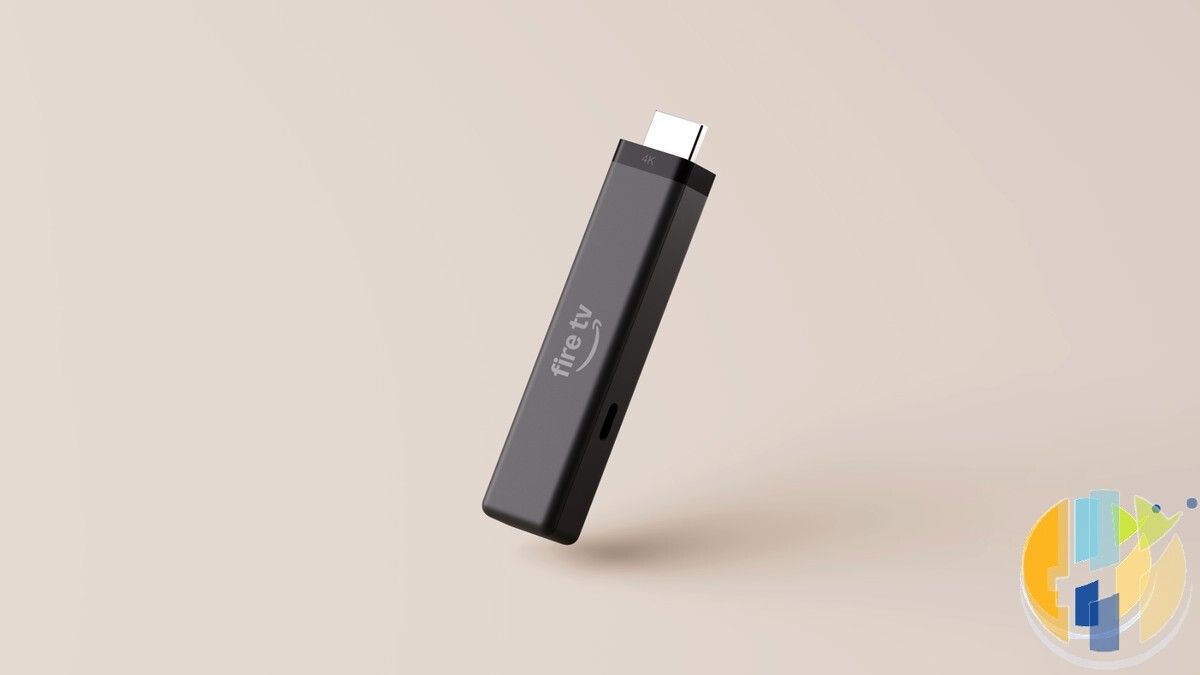
| Spec | Fire TV Stick 4K (3rd Gen, 2026) |
|---|---|
| Operating system | Vega OS (developer specs: OS 2.0) |
| Chip | MediaTek MT8698E, 4x Cortex-A55 up to 1.7 GHz; ARM G310 V2 GPU up to 500 MHz |
| RAM | 1 GB LPDDR4 |
| Storage | 8 GB |
| Wi-Fi | Wi-Fi 6 dual-band (2.4 and 5 GHz) |
| Bluetooth | 5.3 and Bluetooth Low Energy |
| Ethernet | Via an Ethernet adapter |
| Ports | HDMI 2.1 (output), USB-C 2.0 (power) |
| Output resolution | 2160p, 1080p, 720p, up to 60 fps |
| HDR | HDR10, HDR10+, HLG |
| Video codecs | AV1 up to 4K60; H.265 (HEVC) up to 4K60; VP9 up to 2160p60; H.264 up to 4K30 or 1080p60 |
| Audio | HDMI pass-through for Dolby Digital, Dolby Digital Plus, Dolby Atmos, DTS, DTS-HD, MPEG-H |
| Size and weight | 91.5 x 21.1 x 14.5 mm, 39.4 g (Amazon UK listing) |
| Power | Direct Power from a TV USB port, 0.4 m USB-C cable included |
The “35% faster” claim, read properly
Here is Amazon's wording in full: from powering on to streaming, the new stick “gets customers to content from nearly 20-40% faster than a similarly priced 4K stick from another leading brand”. It then says the stick “turns on faster, apps launch over 35% faster, and content starts playing nearly 20% faster”.
Three things to notice:
- The comparison is a rival, not a Fire Stick. Amazon does not name the competitor. It does not compare the new stick with the Fire TV Stick 4K (2nd Gen), the 4K Select or the 4K Max. AFTVnews pointed out that Amazon normally quotes gains over the model being replaced, and that leaving it out here is telling.
- “Nearly” and “from” are doing work. “From nearly 20-40%” is a range with soft edges. It is a marketing figure from Amazon's own testing, not an independent benchmark.
- There is a second claim about TVs. Amazon says it beat the built-in apps on three 4K smart TVs from top-selling brands, averaged across the three most popular apps on Fire TV. Again, no brands or models named.
Could Vega feel quick? Plausibly. A lighter OS on modest hardware can launch apps briskly. But the chip line looks like the 4K Select's: AFTVnews describes the processor and GPU as nearly identical to the outgoing Select, and the developer specs list the same 1.7 GHz quad-core and G310 GPU. The RAM is 1 GB, half the 2 GB in the Fire OS 4K (2nd Gen) and 4K Max (2nd Gen). I would wait for independent tests before treating it as a speed upgrade over anything you own.
Wi-Fi 6: useful, not magic
Wi-Fi 6 is a real improvement over the Wi-Fi 5 in the 4K Select. It copes better on busy home networks. It is dual-band only, so no 6 GHz like the 4K Max's Wi-Fi 6E.
The bigger factor for 4K streaming is still where the stick sits. Behind a TV, close to metal and other cables, any stick can struggle. If you get buffering, read my Wi-Fi fixes guide before blaming the stick; the advice applies to Fire Sticks too. Amazon also lists Ethernet support through an adapter, which is the fix when Wi-Fi is hopeless.
Want a number for your connection before you buy? Run a test on speedtest.husham.com from a phone held where the TV sits. Netflix's help pages recommend 15 Mbps or more for 4K, and that has to survive the evening peak, not just one quiet test.
AV1, HDR10+ and the missing Dolby Vision
AV1 is the efficient modern codec used by services such as YouTube and Netflix to deliver better picture per megabit. Hardware AV1 decoding up to 4K60 is a genuine plus and matters more over time.
HDR10+, HDR10 and HLG are covered. HLG matters for broadcast-style HDR.
Dolby Vision is not supported. AFTVnews says this is the first model with the Fire TV Stick 4K name to lack it since the line began in 2018. If your TV supports Dolby Vision but not HDR10+, titles mastered in Dolby Vision will usually be delivered in plain HDR10 instead. Many viewers will never notice; owners of high-end TVs often will.
Dolby audio is pass-through only. The stick hands Dolby Digital, Digital Plus and Atmos to your TV, soundbar or receiver to decode. That works when the rest of your kit decodes it. If you relied on the old stick to decode, test your setup first. FlatpanelsHD notes that many streaming apps want the device itself to decode Dolby Atmos, and says pass-through “may work for some”.
Bluetooth 5.3 and 8 GB storage
Bluetooth 5.3 with Low Energy covers headphones, speakers and game controllers. Amazon's UK listing pushes private listening with Bluetooth headphones. Fine, but it is a small step, not a headline.
8 GB of storage sounds the same as before, and it matches the old 4K (2nd Gen). The catch is what fits in it. PCWorld reported that the earlier Vega sticks left only about 4 GB usable and lacked an auto-offload setting for unused apps. Amazon has not published the usable figure for this model. If you install a lot of apps, expect to tidy up now and then.
What I would make of it
On paper this is a tidy Vega stick: better Wi-Fi than the Select, USB-C Direct Power, AV1 and HDR10+. It is not a spec upgrade over the Fire OS 4K (2nd Gen) or the 4K Max, and Amazon has not claimed it is faster than either. I have not benchmarked one, and I would ignore anyone treating Amazon's rival-stick numbers as a like-for-like comparison with your current Fire Stick.
The bigger question is not speed but software. If you have not already, read what stops working on Vega OS and who should keep a 4K Max.
FAQ
Is the new Fire TV Stick 4K 35% faster than the old one?
Amazon has not said that. The “over 35% faster” app-launch figure compares it with an unnamed rival's similarly priced 4K stick.
How much RAM does it have?
1 GB, according to Amazon's developer device specifications.
Does it support Dolby Vision or Dolby Atmos?
No Dolby Vision. Dolby Atmos is passed through over HDMI for your TV or soundbar to decode; the stick does not decode it.
Does it support 4K at 60 fps?
Yes, up to 2160p at 60 fps for AV1, HEVC and VP9. H.264 tops out at 4K30 or 1080p60.
Does it have Wi-Fi 6E?
No. Wi-Fi 6 on 2.4 and 5 GHz. Wi-Fi 6E is on the 4K Max.
Best IPTV boxes to buy
These are certified Android TV / Google TV media boxes and sticks that can run players and licensed apps from Google Play. They are not pirate hardware. They do not come with channels or playlists. I am not claiming I personally lab-tested every SKU this month.
Buy one of these when: Fire TV sideload is a hassle on your model, you want Play Store apps on a proper TV OS, or you want a dedicated player shell behind the sofa. No Fire Stick is on this shortlist.
- NVIDIA SHIELD TV Pro: the premium pick, a certified Android TV player with AI upscaling, Dolby Vision, Dolby Atmos and Gigabit Ethernet for the main living-room telly. Amazon UK
- Google TV Streamer 4K: solid Google TV living-room default with Ethernet on the Streamer class hardware. Amazon UK · Amazon US · Amazon DE · Amazon FR · Amazon IT
- Xiaomi TV Box S (3rd Gen): Google TV box with 32GB storage, Dolby Vision and Atmos, a cheaper box route than the Streamer. Amazon UK · Amazon US · Amazon DE · Amazon FR
- Xiaomi TV Stick 4K (2nd Gen): budget Google TV stick shape when you want HDMI-simple, not a full box. Amazon UK · Amazon US · Amazon DE · Amazon IT
- Strong LEAP-NOVA: Google TV certified 4K stick on Android 14 with 32GB storage, Wi-Fi 6 and Dolby Vision, for a second telly. Amazon DE · Amazon FR · Amazon IT
- MECOOL MEon1: Google TV certified 4K box with AI upscaling and 32GB storage when you want a dedicated player shell behind the sofa. Amazon UK
Still a Fire Stick shopper? Fine for Amazon Video and the Appstore universe. Not the shortlist above. And none of these boxes magically make unlicensed streams legal.