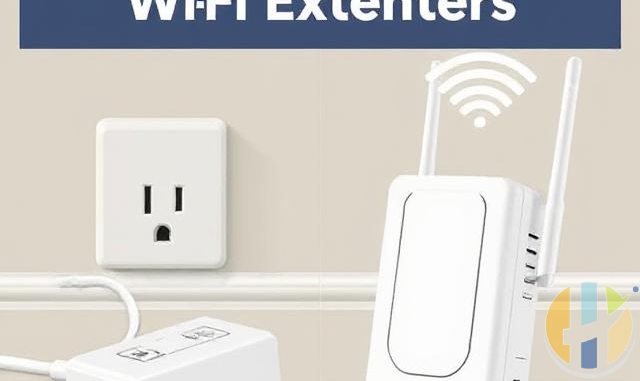
Review: Powerline Adapters vs. WiFi Extenders
In today’s connected world, having a strong, reliable WiFi signal throughout your home is essential. Two popular solutions for extending your WiFi are powerline adapters and WiFi extenders. In this review, we break down the benefits and limitations of each option to help you decide which technology best meets your needs.
Understanding the Technologies
Powerline Adapters
Powerline adapters use your home's electrical wiring to transmit internet data between devices. You plug one adapter into your router and an outlet, and a second adapter into an outlet in the area with a weak signal. This can be a great solution if your home has a solid electrical infrastructure.
Pros:
- Often delivers a stable, wired-like connection.
- Simple setup without needing to run Ethernet cables.
- Works well when WiFi signals are obstructed by walls or floors.
Cons:
- Performance depends on the quality and layout of your wiring.
- May suffer from interference from electrical appliances.
- Speed can be inconsistent over long distances.
WiFi Extenders
WiFi extenders, also known as repeaters or boosters, work by capturing your existing WiFi signal and rebroadcasting it to extend the range. They are generally easy to install and can be moved around to target specific dead zones in your home.
Pros:
- Easy and quick to set up.
- No need for additional wiring.
- Flexible placement to cover various areas.
Cons:
- May reduce overall network speed due to signal repeating.
- Performance drops if not placed correctly.
- Potential interference from overlapping signals.
Comparing the Two Options
When deciding between powerline adapters and WiFi extenders, consider the following factors:
- Installation: WiFi extenders are generally simpler to set up, while powerline adapters require reliable electrical wiring.
- Performance: Powerline adapters can deliver near-wired speeds if your home’s wiring is in good condition. WiFi extenders, on the other hand, can sometimes halve your available bandwidth, especially if they operate on the same frequency as your primary network.
- Environment: In homes with thick walls or multiple floors, powerline adapters may overcome physical obstacles better than WiFi extenders. However, if your electrical wiring is old or inconsistent, WiFi extenders might perform better.
- Cost: Both options come in a range of prices. Evaluate your home’s layout and internet usage requirements to determine which offers the best value.
Conclusion and Recommendations
Ultimately, the best option depends on your specific home environment and needs. If you have robust electrical wiring and need a more stable, high-speed connection in a remote area of your home, powerline adapters may be the ideal solution. However, if you prefer a flexible and simple installation process with the ability to easily reposition your device, then a WiFi extender could be a better fit.
Before making a decision, consider testing each option if possible. Many users find that a combination of both technologies can sometimes provide the best overall coverage.