Somewhere in Hertfordshire, a provider called DIGI will now sell you a symmetric 10Gbps full fibre line for £25 a month, and ISPreview reported in September that it already reaches more than 10,000 homes. Netflix’s own help page says a 4K stream needs 15Mbps or higher. Do the maths and that line could carry about 660 4K streams at once, which is roughly 655 more tellies than any household on Earth owns.
And yet, on Saturday night with the big match on, the spinning wheel still turns up like an uninvited uncle. Not because 10Gbps is a lie, but because a stream has to survive a long chain of things, and your broadband speed is only one link. Here is the whole chain, server to sofa, for legal streaming: Sky Stream, Freely, EE TV, YouTube TV, Netflix, iPlayer and every other service that sends television down an internet connection.
The speed on the contract is not the speed at the telly
Your 10Gbps arrives at the router. That is where the marketing department’s interest in you ends. Even ISPreview notes that DIGI’s line is more realistically 7 to 8Gbps once network overheads and UK advertising rules are counted. Then the router has to hand it on, and very few home routers can push multi gigabit speeds to a single device. Almost no streaming stick can receive it anyway.
Wi-Fi vs Ethernet: the oldest fight in the house
The Wi-Fi numbers on the box are theoretical maximums measured somewhere with no walls, no neighbours, no microwave and no fish tank. In real life a stick behind the telly is shouting through a TV panel and a wall while sharing the air with every network on the street. For live TV the problem is rarely raw speed. It is consistency. A link that swings from 300Mbps to 4Mbps for two seconds will make a stream drop quality or stall, even though your speed test “averages” brilliantly.
A cable fixes most of this. Ethernet does not care about walls, neighbours or the fish. If you cannot run one, a mesh node or powerline adapter near the TV is the next best thing. I covered the Wi-Fi side in Google TV Stick Buffering: Fix Wi-Fi Before You Blame the App, and the router side in Best 20 Home Routers for UK Homes.
The 100Mbps port hiding in your “4K” box
Here comes the small print. Plenty of budget boxes have a 10/100 Ethernet port, and Amazon’s own Ethernet Adapter for Fire TV is listed as “10/100 Ethernet”. So your 10Gbps line reaches the TV and shrinks to 100Mbps, which is one percent of what you are paying for.
The twist: for one 4K stream at 15Mbps, 100Mbps over a cable is still plenty, and far better than flaky Wi-Fi. The port mostly ruins your speed test screenshot, not your film. It bites when the box is also downloading an update, or when a weak processor struggles to move data and decode video at the same time. If you are buying new, a box with Gigabit Ethernet, such as the NVIDIA SHIELD TV Pro in the list below, ends the argument.
Decoding: the buffering that is not buffering
Some “buffering” is not a network problem at all. Video arrives compressed as H.264, HEVC or AV1, and the box has to decode it in hardware. A device without the right decoder, or one cooking itself behind the telly, will stutter, drop frames or crash back to the menu. No broadband upgrade helps, because the data has already arrived. It is just waiting for a chip that is out of breath. Make sure the device officially supports the app and the resolution you are asking for, and keep it updated.
The other end: servers, CDNs and peering
Your film does not come from one giant computer in California. Streaming services use content delivery networks, or CDNs, which keep copies of video close to viewers. Netflix runs its own, Open Connect, and says it partners with over a thousand ISPs, often by placing its appliances inside the ISP’s own network.
So quality also depends on where the nearest copy lives and how well your ISP connects to it. The meeting points between networks, called peering or interconnection, can fill up at busy times while your own line sits idle. Live events are the worst case, because everyone wants the same bytes at the same second. When Netflix streamed Jake Paul vs Mike Tyson in November 2024, it peaked at 65 million concurrent streams and plenty of viewers got buffering, as The Verge reported. No home upgrade would have fixed that.
Peak time: blame the evening, not always the line
Ofcom’s Connected Nations 2024 report found average download speeds between 8pm and 10pm were 98.7% to 99.7% of the daily average, depending on the technology. On paper, UK access networks barely flinch at peak time. Ofcom adds that individual homes can see something different, which is regulator for “your mileage may vary”. If your stream only falls over at 9pm on a Saturday, look first at the Wi-Fi in your house (every phone is busy too), the service’s own servers, and the route between your ISP and that service.
ISP throttling: real, but not everywhere
Traffic management is real, and partly legal. The UK kept the EU’s net neutrality rules after Brexit, and Ofcom revised its guidance in October 2023: providers may use traffic management to avoid congestion at peak times, sell premium quality packages and offer zero rated deals in most cases. In the EU, Regulation (EU) 2015/2120 requires providers to treat traffic equally, with reasonable traffic management allowed. In the United States, the Sixth Circuit Court of Appeals struck down the FCC’s net neutrality rules on 2 January 2025, so protection now depends on state laws such as California’s.
The best hard evidence of streaming throttling comes from mobile. A Northeastern University and UMass Amherst study using the Wehe app analysed over a million tests from more than 126,000 phones and found US carriers throttling video around the clock, not just when busy. AT&T throttled 70% of Netflix tests and 74% of YouTube tests. That was 2019 and US mobile, so it is not proof your UK home fibre does the same. It does prove the practice exists and can be measured.
How to test it properly
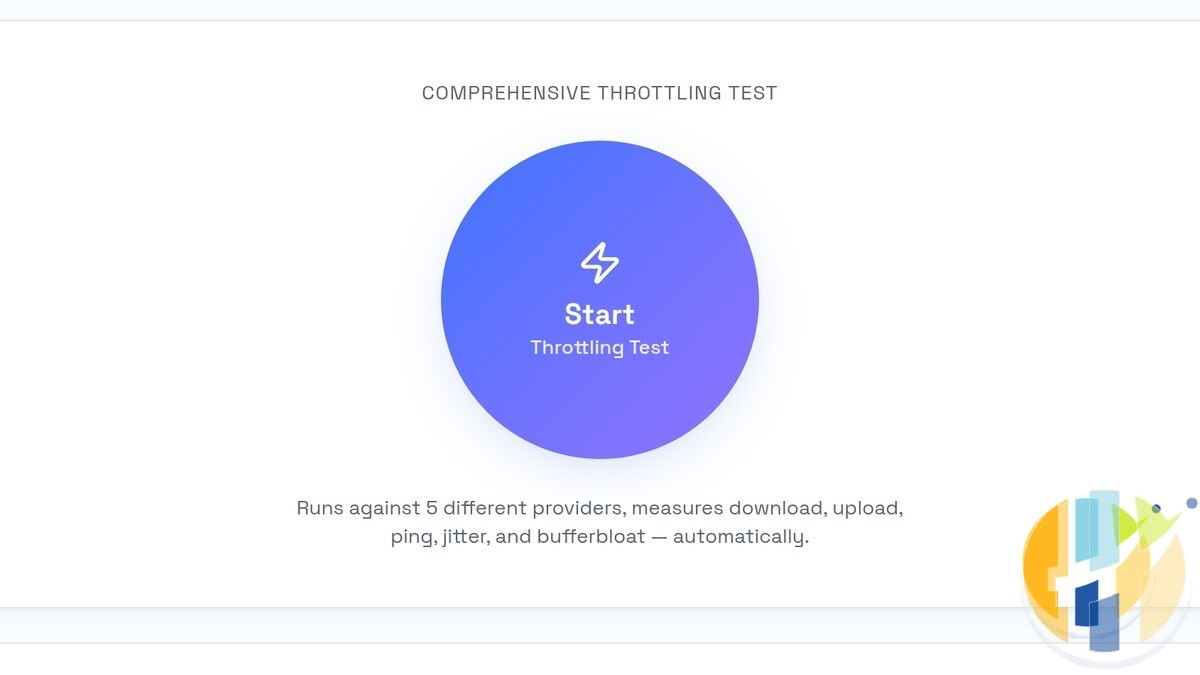
One speed test to one server tells you very little about streaming. That is why I built speedtest.husham.com. It tests against five different providers and measures download, upload, ping, jitter and bufferbloat. If one provider is dramatically slower than the rest, that points to a route or throttling problem rather than your line. The page itself says the verdict is a strong hint, not proof, and I agree with it.
- Test on a laptop plugged into the router by cable. That is your line.
- Test again over Wi-Fi from the sofa. The difference is your house.
- Repeat at 9pm, when the stream actually buffers. The difference is peak time.
- Test the TV device too. Netflix has a “Check your Network” test in its TV app, under Get Help.
- Watch jitter and bufferbloat, not just the big Mbps number. Ping spikes under load are what make live TV stutter.
Where a VPN fits, and where it does not
A VPN hides which service you are using from your ISP. If a legal service is smooth through a VPN and rubbish without one, that is a useful clue that something on the provider’s side is treating that traffic differently, and it is evidence worth taking to the provider or to Ofcom. A VPN can also slow things down itself, so treat it as a diagnostic tool, not a speed button. It changes nothing about legality: an unlicensed stream is still unlicensed with a VPN switched on, and some legal services do not allow VPNs in their terms at all.
The same goes for player apps. A player is just a player. It needs a service you pay for or are licensed to watch, or your own media. The law is not interested in the box. It is interested in the source.
So before you pay for 10Gbps to cure buffering, plug in a cable, check the box’s port, test at peak time and look at the route. The broadband adverts will not mention any of this, of course. Someone has to sell next year’s 20Gbps package.
Best IPTV boxes to buy
These are media boxes and sticks that can run players and licensed apps. The first six are Google certified Android TV or Google TV devices with Google Play; the last one, the Formuler, runs its own Android and is not certified. They are not pirate hardware. They do not come with channels or playlists. I am not claiming I personally lab-tested every SKU this month.
Buy one of these when: Fire TV sideload is a hassle on your model, you want Play Store apps on a proper TV OS, or you want a dedicated player shell behind the sofa. No Fire TV device is on this shortlist.
- NVIDIA SHIELD TV Pro: the premium pick, a certified Android TV player with AI upscaling, Dolby Vision/Atmos and Gigabit Ethernet for the main living-room telly. Amazon UK | Amazon US | Amazon DE | Amazon FR | Amazon IT
- Google TV Streamer 4K: solid Google TV living-room default with Ethernet, 32GB storage and Dolby Vision/Atmos. Amazon UK | Amazon US | Amazon DE | Amazon FR | Amazon IT
- Xiaomi TV Box S (3rd Gen): Google TV box with 32GB storage, Wi-Fi 6 and Dolby Vision/Atmos, the cheaper box route than the Streamer. Amazon UK | Amazon US | Amazon DE | Amazon FR | Amazon IT
- Xiaomi TV Stick 4K (2nd Gen): budget Google TV stick with Wi-Fi 6 and Dolby Vision/Atmos when you want HDMI-simple, not a full box. Amazon UK | Amazon US | Amazon DE | Amazon FR | Amazon IT
- Budget Google TV 4K player: a cheaper certified Google TV player for a second telly. The model differs by store, so each link names the one you get there. MECOOL KD3 (Amazon UK) | onn. Google TV 4K Streaming Box (Amazon US) | Strong LEAP-NOVA-X (Amazon DE) | Strong LEAP-NOVA-X (Amazon FR) | Strong LEAP-NOVA-X (Amazon IT)
- MECOOL MEon1: Google TV certified 4K box with AI upscaling and 32GB storage for a dedicated player behind the sofa. Amazon UK
- Formuler Z12 Ultra SE: the newest Formuler box, built around MYTVOnline 4 for IPTV playlists. It runs Formuler’s own Android rather than certified Google TV, so there is no Netflix in HD and it is the one box here without Google certification. Formuler Z12 Ultra SE (Amazon UK) | Formuler Z12 Ultra SE (Amazon US) | Formuler Z12 Ultra SE (Amazon DE) | Formuler Z12 Ultra SE (Amazon FR) | Formuler Z12 Ultra SE (Amazon IT)
Still shopping for a Fire TV device? Fine for Prime Video and the Appstore universe. Not the shortlist above. And none of these boxes magically make unlicensed streams legal.
Sources
- ISPreview: New 10Gbps broadband ISP DIGI expands full fibre to 10,000 UK premises (8 September 2026)
- Netflix Help Center: Netflix-recommended internet speeds
- Amazon: Amazon Ethernet Adapter for Amazon Fire TV Devices (product listing, “10/100 Ethernet”)
- Netflix Open Connect: overview for ISPs
- The Verge: Netflix served the Tyson vs. Paul fight to 60 million households (16 November 2024)
- Ofcom: Connected Nations UK report 2024 (peak time download speeds)
- Ofcom: Ofcom revises net neutrality guidance (26 October 2023)
- EUR-Lex: Regulation (EU) 2015/2120 on open internet access
- US Court of Appeals for the Sixth Circuit: Ohio Telecom Association v. FCC opinion (2 January 2025)
- Northeastern University: Wireless networks are throttling video streaming 24/7 (27 August 2019)
- Wehe: A Large-Scale Analysis of Deployed Traffic Differentiation Practices (SIGCOMM 2019)
- speedtest.husham.com: multi-provider speed and throttling test
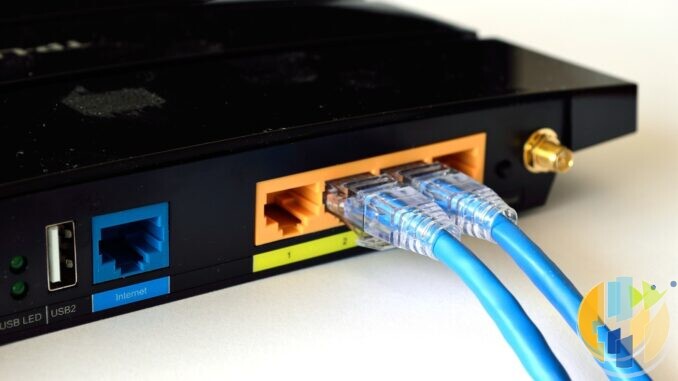
Featured photo: “ResidentialGatewayCloseup” by Raysonho @ Open Grid Scheduler / Grid Engine, Wikimedia Commons, CC0, cropped. Inline image: screenshot of speedtest.husham.com, 11 October 2026.
Written by Dr Husham Memar